


Fixed Assets Explained:
Examples, Types, Rules, and GASB 34 for Public Agencies
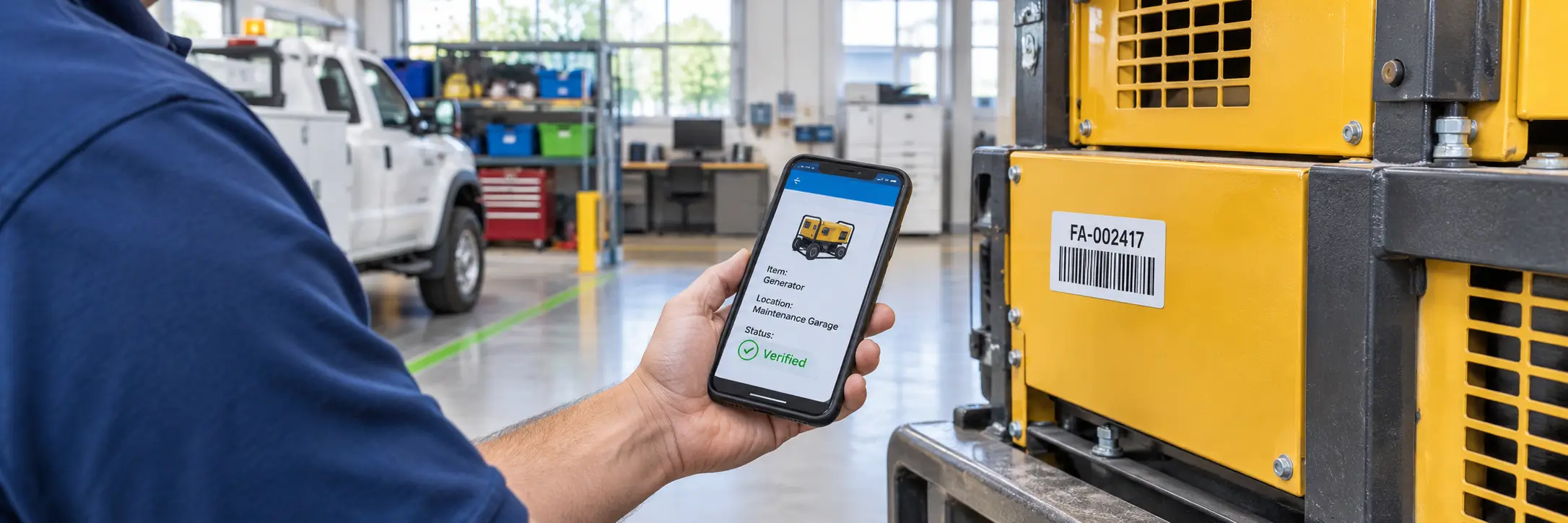
Short answerA fixed asset is a long-term, physical item that an organization uses rather than sells, and that lasts more than a year. Common examples are land, buildings, vehicles, machinery, computers and furniture. Fixed assets are recorded at cost, and most of them are depreciated over their useful life. Public agencies call them capital assets and report them under GASB Statement 34.
This article is general information, not accounting advice. Check your organization’s capitalization policy and talk to your auditor or accountant before changing how you record assets.
Key takeaways
- Use, not resale, makes it fixed. The same laptop is a fixed asset at a city office and inventory at a computer store.
- The capitalization threshold decides what gets recorded. Items below it are usually expensed, even if they last for years.
- Most fixed assets are depreciated, but not all. Land and construction in progress are the common exceptions.
- Leasehold improvements are capitalized, then amortized over the shorter of their useful life or the lease term.
- Public agencies report capital assets under GASB 34, and federally funded equipment adds 2 CFR 200 record and inventory rules.
- Audits usually find gaps in the physical records, not the math: assets that moved, have no tag or were thrown away without being written off.
What are 10 examples of fixed assets?
Here are ten common fixed assets, the kind most organizations hold.
| # | Fixed asset | Example |
|---|---|---|
| 1 | Land | The lot under a city hall or a school campus |
| 2 | Buildings | Offices, warehouses, fire stations, classrooms |
| 3 | Vehicles | Fleet cars, police cruisers, trucks, buses |
| 4 | Machinery | Production lines, generators, HVAC units |
| 5 | Computers and servers | Laptops, desktops, network switches, data center servers |
| 6 | Furniture and fixtures | Desks, chairs, shelving, lab benches |
| 7 | Office equipment | Copiers, large-format printers, phone systems |
| 8 | Leasehold improvements | Walls, wiring or flooring added to a rented space |
| 9 | Tools and heavy equipment | Excavators, forklifts, lifts, specialty tool sets |
| 10 | Building improvements | A new roof, an elevator or an HVAC replacement that extends a building's life |
What are the main types of fixed assets?
No accounting standard sets an official list of “four types.” Most organizations group fixed assets by how long they last and how they are depreciated. Under U.S. GAAP, ASC 360-10 names land and land improvements, buildings, machinery and equipment, and furniture and fixtures as long-lived tangible assets. That is the closest thing to the four types people search for. Public agencies usually add infrastructure and construction in progress.
Common categories on a fixed asset register:
- Land. Never depreciated.
- Land improvements. Parking lots, fences, sidewalks, outdoor lighting.
- Buildings and building improvements. The structure plus major upgrades that extend its life.
- Machinery and equipment. Production, shop, medical and lab equipment.
- Vehicles. Cars, trucks, buses, specialty vehicles.
- Furniture and fixtures. Desks, seating, shelving, built-in cabinets.
- Computer and IT equipment. Hardware that meets the capitalization threshold.
- Leasehold improvements. Upgrades to space the organization rents.
- Infrastructure (public sector). Roads, bridges, water and sewer systems, storm drains.
- Construction in progress. Projects not yet finished or in service.
Some organizations also record intangible assets, such as software licenses or easements, on the same register. They are not physical, so this guide focuses on tangible fixed assets.
What is not a fixed asset?
An item is not a fixed asset if it is meant for sale, will be used up within a year, or costs less than the capitalization threshold.
- Inventory. Goods held for sale or used to make products. A forklift dealer’s forklifts are inventory, not fixed assets.
- Supplies and consumables. Paper, cleaning products, spare parts and medical supplies are used up quickly and expensed.
- Prepaid expenses. Insurance, rent or software subscriptions paid in advance are current assets, not physical property.
- Items under the capitalization threshold. A $300 chair lasts for years, but most organizations expense it because it falls below the threshold.
- Assets held for sale or investment. Under the Minnesota Office of the State Auditor’s capital asset guide, assets held for sale or investment and assets permanently taken out of service are not capital assets.
Items below the threshold may still be tracked, even though they are not capitalized. Laptops, tablets and radios are the usual examples, because they are easy to lose.
What are the GAAP basics for fixed assets?
For businesses and nonprofits, the U.S. GAAP rules for fixed assets live in FASB ASC 360, Property, Plant, and Equipment. State and local governments follow GASB standards instead (see the GASB 34 section below). The core ideas are the same for both.
- Cost basis. Record the asset at historical cost: the purchase price plus costs to get it ready for use, such as shipping, installation and setup.
- Capitalization threshold. Each organization sets a dollar amount above which it capitalizes items. $5,000 is common, but larger organizations often use higher amounts. Write the policy down and apply it consistently.
- Useful life. Estimate how many years the asset will be used. Buildings may last decades; computers, three to five years.
- Depreciation. Spread the cost, less any salvage value, over the useful life. Straight-line is the most common method.
- Impairment. If an asset loses value or usefulness suddenly, for example from damage or obsolescence, test it for impairment and write it down if needed.
- Disposal. When an asset is sold, scrapped or donated, remove its cost and accumulated depreciation from the books and record any gain or loss.
- Repairs vs. improvements. Routine repairs are expensed. Improvements that extend useful life, add capacity or improve efficiency are capitalized.
What assets cannot be depreciated?
Land is the main asset that is never depreciated, because it doesn’t wear out. Several other assets are not depreciated, or not yet:
- Land. Considered to have an unlimited life. Land improvements, such as parking lots and fences, are depreciated separately.
- Construction in progress. Not depreciated until the project is finished and placed in service.
- Assets not yet in service. Equipment bought but not yet installed or in use.
- Inexhaustible works of art and historical treasures. Common in museums, libraries and government collections.
- Infrastructure under GASB’s modified approach. Governments that meet the approach’s requirements expense preservation costs instead of depreciating these assets.
- Assets held for sale. These are no longer depreciated.
- Fully depreciated assets. These stay on the register until disposal, but they have no depreciation left to record.
These exceptions follow the Minnesota Office of the State Auditor’s capital asset guide for governments and FASB ASC 360 for businesses.
What journal entries do fixed assets need?
Most fixed assets need three journal entries over their life: one when you buy them, one for each depreciation period and one at disposal. The examples below use a $12,000 truck bought with cash.
| Event | Debit | Credit | Example |
|---|---|---|---|
| Purchase | Vehicles (fixed asset) $12,000 | Cash or Accounts Payable $12,000 | Truck bought and placed in service |
| Depreciation (each period) | Depreciation Expense $2,000 | Accumulated Depreciation $2,000 | Straight-line, 6-year life, no salvage value |
| Disposal (sold for $4,000 after 4 years) | Cash $4,000 and Accumulated Depreciation $8,000 | Vehicles $12,000 | Book value is $4,000, so no gain or loss |
If the sale price is higher than book value, credit a gain for the difference. If it is lower, debit a loss. Governments record these same entries in their government-wide statements. In governmental funds, which use modified accrual, a purchase is recorded as an expenditure, no depreciation is recorded, and sale proceeds are recorded as an other financing source.
Are leasehold improvements capitalized or expensed?
Leasehold improvements are capitalized, not expensed, when they meet your capitalization policy. Examples are new walls, wiring, flooring or built-in fixtures added to a rented space. Under ASC 842-20-35-12, a tenant generally amortizes them over the shorter of their useful life or the remaining lease term.
There are exceptions. If ownership of the property will pass to the tenant, or the tenant is reasonably certain to buy it, the improvements are amortized over their useful life. Since ASU 2023-01, improvements in leases between entities under common control are amortized over their useful life to the group, regardless of the lease term. Small repairs and routine maintenance on rented space are still expensed.
How do public agencies report fixed assets under GASB 34?
State and local governments report fixed assets as capital assets under GASB Statement 34, issued in June 1999. It requires governments to report capital assets, including infrastructure, in their government-wide statement of net position and to depreciate them on an accrual basis. Under the Michigan Department of Treasury’s summary, infrastructure assets must be inventoried, recorded as capital assets and reported in the statement of net assets.
The main GASB 34 points for a fixed asset manager:
- What counts. Capital assets are tangible or intangible assets used in operations with useful lives beyond one reporting period, such as land, buildings, vehicles, equipment and infrastructure.
- Infrastructure has two options. Governments can depreciate roads, bridges and water systems like other assets, or use the modified approach. That approach requires an asset management system and condition assessments, and preservation costs are expensed instead of depreciated.
- Thresholds are set locally. GASB doesn’t set one capitalization amount. The Minnesota Office of the State Auditor suggests sample thresholds, such as $5,000 for machinery, equipment and vehicles.
- Impairment. GASB Statement 42 covers capital assets that suffer a significant, unexpected and permanent drop in service utility.
Federal equipment rules on top of GASB
Agencies and schools that buy equipment with federal grants also follow 2 CFR 200.313. It requires property records with funding source and award number, and a physical inventory at least every two years. Our guide to school district asset tracking for federally funded equipment covers those rules in detail.
Why audits find gaps
Most capital asset audit findings come from the physical records, not the accounting math. The usual problems:
- Moved assets. Equipment changes buildings or departments and the register still shows the old location.
- No tags. Assets were never tagged, so counters can’t match them to a record.
- Unrecorded disposals. Items were scrapped, traded in or stolen but never written off, so the books overstate assets.
- Missing funding source. Grant-funded equipment is not flagged, so federal compliance can’t be shown.
- No written policy. Thresholds and repair-vs.-improvement rules are applied inconsistently.
How do you keep a fixed asset register audit-ready?
An audit-ready register holds one record per asset with the fields auditors test, and you prove it with regular physical counts. Keep these fields for every asset:
| Field | Why auditors care |
|---|---|
| Asset tag number | Links the physical item to its record |
| Description, make, model, serial number | Identifies the exact item |
| Asset category / class | Sets the useful life and depreciation method |
| Acquisition date and in-service date | Starts the depreciation clock |
| Cost (or acquisition value if donated) | The amount capitalized |
| Funding source and award number | Required for grant-funded equipment |
| Department or function | Needed for government-wide reporting by function |
| Location (site, building, room) | Lets counters find it |
| Custodian | Names who is responsible for the item |
| Useful life and salvage value | Drive the depreciation amount |
| Condition | Supports impairment and replacement planning |
| Disposal date, method and proceeds | Shows the asset left the books properly |
Fixed asset register upkeep procedure
- Tag every asset. Apply a barcode or RFID tag when the item is received, and link the tag to its record.
- Record location and custodian. Assign each asset to a site, room and responsible person. Update the record whenever it moves.
- Run physical audits. Scan every tag by building or department, at least every two years for federally funded equipment. Many agencies count high-risk items more often.
- Log disposals. Require an approval for every disposal, and mark the record as disposed with the date, method and proceeds. Never delete it.
- Reconcile to the ledger. Compare the register's totals with the general ledger at least at year-end. Investigate and document every difference.
How does BarCloud help with fixed asset records?
BarCloud keeps fixed asset records, physical counts and depreciation in one system that public agencies can run in the cloud or on their own servers. These features match the register and audit steps above:
- Barcode tagging and mobile scanning for receiving, issuing, tracking and auditing assets (government).
- Location and custody tracking by site, department and user, with check-in/check-out and chain-of-custody records showing who issued, received or returned an item.
- Physical inventory counts by site, room, bin or category, with discrepancy reconciliation.
- Audit trails that record asset history and user activity.
- Depreciation using straight-line, double-declining or sum-of-years methods, with a configurable fiscal year and reporting period (depreciation).
- Scheduled reports that can go automatically to auditors or accountants.
- Role-based access by site, department and category, with admin, manager, staff and requester roles.
- Cloud, self-hosted or on-premise deployment. BarCloud is SOC 2 certified.
Arlington County Fire Department in Virginia needed this kind of record across 10 fire stations, fire training and fire marshal offices. Its Logistics Branch tracked supplies and larger assets, such as washers and refrigerators, by hand, with records spread across locations. It needed accurate physical inventory and asset counts plus custom usage and expenditure reporting. After moving to barcode tracking with unique IDs for stations, employees and apparatus, and printing its own tags in-house, the department spends less time on manual tracking and sends automated cost reports to leadership. As Fire/EMS Warehouse Coordinator LaMar Smith put it, the system “gave us the freedom to create a tracking process that was customized to our requirements” (case study).
Frequently asked questions
What is a capitalization threshold?
A capitalization threshold is the minimum cost at which an organization records an item as a fixed asset instead of expensing it. Each organization sets its own, and $5,000 per item is common. Items below the threshold are expensed, but high-risk items may still be tracked.
How often should fixed assets be audited?
Federally funded equipment must be physically inventoried at least once every two years under 2 CFR 200.313. Many organizations count all capital assets yearly before closing the books, and count laptops and other high-risk items more often. Check your state's rules and your auditor's expectations.
What's the difference between a fixed asset register and an inventory list?
A fixed asset register lists items the organization keeps and uses, with cost, useful life, depreciation and location. An inventory list tracks items that are sold or used up, with quantities and reorder points. Many public agencies need both: a register for vehicles and equipment, and an inventory list for supplies.
What happens if fixed asset records don't match the books?
An auditor may report a finding, and the financial statements may overstate or understate assets. For grant-funded equipment, the agency may also be out of compliance with federal rules. The fix is to run a physical count, write off missing items with documentation, add found items, and reconcile the register to the ledger.
This article is general information, not accounting advice. Consult a qualified accountant or auditor about your organization's policies.
Sources
- Deloitte Accounting Research Tool, ASC 360, Property, Plant, and Equipment
- RSM, Lessee Accounting for Tenant Improvements (ASC 842-20-35-12)
- Grant Thornton, New Leasing Guidance for Entities Under Common Control (ASU 2023-01)
- GASB, Statement No. 34, Basic Financial Statements and Management's Discussion and Analysis for State and Local Governments (June 1999)
- Minnesota Office of the State Auditor, Minnesota Guide to Local Government Capital Assets (updated July 2025)
- Michigan Department of Treasury, Accounting and Reporting Infrastructure Assets: Cities and Villages
- Journal of Accountancy, Government Reporting Faces an Overhaul
- eCFR, 2 CFR 200.313 Equipment
- BarCloud, Arlington County Fire Department case study
- BarCloud, Depreciation
Getting ready for a GASB 34 or 2 CFR 200 audit?
BarCloud tags, counts and depreciates fixed assets in one system, in the cloud or on-premise, and keeps a full history for every asset.
How can we help?
Quick actions to find your perfect inventory system.
How can we help?
Quick actions to find your perfect inventory system.
Download the 2026 Comparison Guide
Get the full feature-by-feature breakdown — pricing, integrations, and ratings included.
Schedule a Free Consultation
An inventory expert will guide you through your options based on your specific needs.
Get a Demo & Free Trial
See how BarCloud's inventory system fits your business — book a personalized walkthrough.
Request a Quote
Tell us about your business and we'll send pricing tailored to your inventory needs.
Your download is starting…
If it doesn't begin automatically, click below.
Download PDFThanks — we'll be in touch.
A BarCloud specialist will reach out within one business day.