

What Is 3PL? Understanding Third-Party Logistics
in Modern Supply Chains
It’s rare for a company to handle every aspect of its operations entirely on its own. As much as businesses may want to keep absolutely every aspect of what they do in-house to ensure it’s done right, the reality is that most simply don’t have the bandwidth to do so. This is where businesses turn to a third-party logistics provider to outsource certain capabilities so they can stay focused on their core competencies.
What is Third-Party Logistics?
One of the most frequently outsourced functions for companies of any size is logistics, and with good reason. Moving goods from Point A to Point B is never as easy as it sounds, especially at the scale most modern businesses need to do it. Third-party logistics (3PL) takes the complexity and stress that comes with supply chain management off a business’s shoulders and entrusts it to an external provider. Whether a provider assumes one or two functions or manages the entire logistics operation, 3PL providers are a critical element of the modern business landscape.
Most companies choose 3PL in response to growth and added complexity. As their order volumes increase and their product mix becomes more diverse, their in-house resources may not be enough to rise to the moment. 3PL becomes a scalable and cost-effective solution that helps companies balance control with efficiency. This is because 3PL providers offer specialized expertise, infrastructure, and technology that in-house logistics teams often lack. Businesses that can see the value of 3PL and how it fits into the broader supply chain outsourcing infrastructure stand to benefit the most from these services.
What Do 3PL Providers Do?
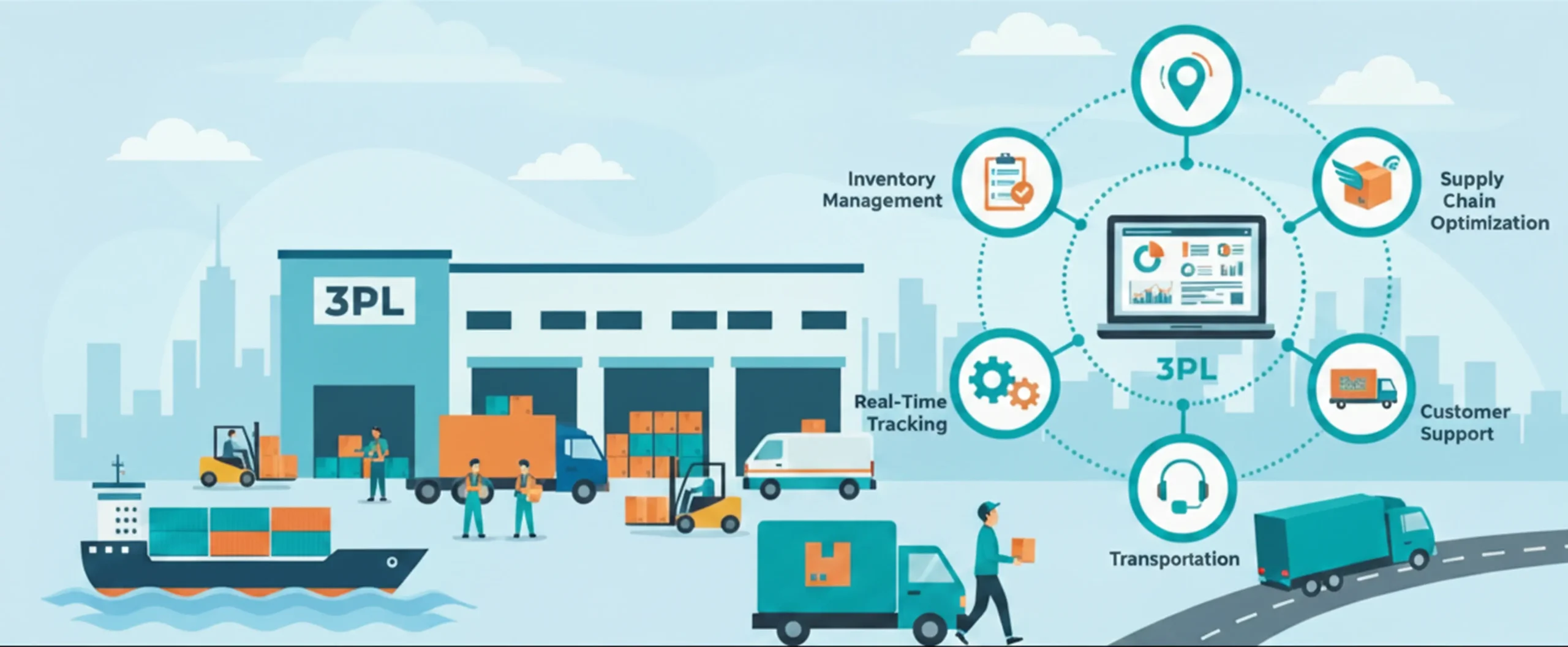
3PL providers can handle virtually every aspect of a company’s supply chain for it on an outsourced basis. This can include common tasks such as warehousing, inventory storage, order fulfillment, picking and packing, transportation management, and returns processing. In essence, any element of logistics that a company is unable or unwilling to perform in-house can be outsourced to a 3PL partner.
There is significant variability in the services a 3PL provider offers, giving companies the ability to choose which aspects of logistics they wish to outsource. Many 3PL companies specialize in a single function, such as transportation or warehousing, while others offer end-to-end services for companies looking for a comprehensive supply chain management solution.
No matter how many capabilities these providers deliver, modern 3PL partners can often integrate with a company’s workflows and business systems. This means they can connect to inventory systems, ecommerce fulfillment platforms, and enterprise resource planning tools to enhance the real-time visibility and coordination they offer across the supply chain.
How 3PL Works: Step-by-Step Logistics Process
Working with an end-to-end 3PL provider can help streamline a company’s supply chain and improve the overall service it provides for its customers. To understand exactly what this looks like in practice, here’s a typical workflow for 3PL from intake to delivery:
- Inventory is received from manufacturers or suppliers. The 3PL inspects the goods and logs them into its internal systems.
- Any inventory that will not be shipped immediately is stored in a secure 3PL warehouse location.
- As orders are received, the 3PL provider picks the items at the fulfillment center based on the order data and packs them based on the shipping requirements.
- The 3PL company coordinates transportation for shipments, either through its own in-house capabilities or by working with a carrier.
- The goods are delivered to the end customer. The 3PL provider also may provide reverse logistics capabilities including returns, restocking, or disposal to create a complete fulfillment loop.
The most effective 3PL operations are those that feature full integration with the original company’s internal systems. Data flows between the company’s inventory management systems and order management platforms and the 3PL provider’s warehousing and transportation management systems. With these integrations in place, real-time data exchanges concerning order updates, inventory levels, and shipment tracking are enabled. This ensures both parties always operate from the same information and therefore reduces delays that can be caused by manual data transfers or system disconnects.
Another critical aspect of success when working with 3PL providers is visibility. Without clear and shared visibility across inventory and order status, it’s nearly impossible to achieve the level of coordination necessary for effective and efficient supply chain management. Having accurate tracking, clearly defined workflows, and aligned data across all systems also helps prevent common concerns such as stock discrepancies, delayed shipments, or fulfillment errors. Strong coordination with 3PL partners allows operations to run predictably and at scale.
Why Companies Use 3PL
Choosing to outsource logistics to a 3PL provider can provide numerous benefits for a company, including:
- Operational and Cost Efficiencies: Working with a 3PL partner reduces the need for internal infrastructure, labor, and technology investments. This frees up a considerable amount of capital while also providing bandwidth the company can allocate elsewhere. At the same time, a 3PL partner’s specialized expertise and established processes lead to higher efficiency in overall operations.
- Scalability and Flexibility: By outsourcing logistics, companies can scale their supply chain operations up or down based on demand, seasonal fluctuations, or expansion into new markets. Working with a 3PL provider makes all of this much easier and doesn’t require the level of capital investment they would need if everything was kept in-house.
- Supply Chain Performance: Companies that outsource their logistics can achieve faster fulfillment, broaden their geographical reach, and access established carrier networks. These advantages lead to improved delivery times and a better overall customer experience.
- Greater Strategic Focus: Without having to juggle all the various aspects of their supply chains, businesses that work with 3PL providers can keep their focus on core activities. These include product development, sales, and customer acquisition. Because they aren’t bogged down in operational execution at all hours, they are free to look ahead and ensure their strategies align with their long-term goals.
3PL vs. 4PL vs. In-House Logistics: What Are the Differences?
In addition to the choice between keeping logistics in-house and outsourcing to a 3PL provider, companies also have the option to work under what’s known as a 4PL model. Under a 4PL arrangement, companies work with a provider who oversees and manages multiple logistics partners.
Each model — in-house, 3PL, and 4PL — can be successful when applied in the right circumstances. For example, in-house logistics are best for companies where control and customization are most important. Although the resource requirements are higher when keeping logistics in-house, companies maintain more autonomy and aren’t beholden to an outsourced provider’s availability or capabilities.
The 3PL model is perhaps best suited for organizations that want to maintain a high level of operational support and scalability. By handing over their supply chains to experienced partners, companies gain the 3PL services they need as well as the ability to scale up or down at a moment’s notice without making a large-scale commitment of their own resources. In the case of 4PL, this structure tends to work best for organizations with exceptionally complex supply chains. The centralized orchestration of 4PL makes managing such supply chains easier, but this tends to come with a higher price tag.
Challenges and Considerations When Working with a 3PL
Choosing to outsource logistics to a 3PL provider means companies may need to make certain sacrifices. Primarily, they surrender a certain amount of direct control over their operations and therefore need to shift from managing tasks to managing performance and outcomes.
Another consideration is ensuring systems between the company and its 3PL partner are well-integrated. Without consistent communication or clearly defined performance metrics, problems can quickly overtake any operational advantages that may exist.
Pricing structures when working with 3PL providers also can be complex, and companies may be surprised by hidden fees or misunderstandings. This is why it’s critical to clearly define the service scope and any agreements up front and as soon as possible to prevent any confusion from seeping into the arrangement.
Companies that want to take advantage of 3PL need to choose their partners carefully, evaluating them on multiple fronts beyond mere cost considerations. Among the most important elements to look for are technology compatibility, service capabilities, geographic reach, and overall reliability. Ensuring all these align with the company’s stated objectives is essential if leadership wants to achieve the desired benefits of 3PL logistics.
When to Use a 3PL Provider and How to Get Started
Businesses typically consider switching to a 3PL model when their order volumes suddenly increase, fulfillment becomes especially complex, their multi-location inventory expands, or their internal logistics become inefficient. When choosing a 3PL company to partner with, companies should pay close attention to aligning their systems, establishing clear KPIs, and maintaining visibility into inventory and fulfillment performance across internal and external operations.
If you’re thinking about moving to a 3PL model for your logistics, it’s important to have the right solutions built into the process. BarCloud is a technology platform built to help companies maintain accurate inventory control and real-time visibility into their stock, which is critical for ensuring proper alignment between internal teams and the 3PL provider. BarCloud helps companies keep track of their inventory whether they manage logistics in-house or through 3PL partners without disrupting existing workflows. Get in touch with us today to learn more about how our barcode inventory system can help you prepare for working with a 3PL provider.
How can we help?
Quick actions to find your perfect inventory system.
How can we help?
Quick actions to find your perfect inventory system.
Download the 2026 Comparison Guide
Get the full feature-by-feature breakdown — pricing, integrations, and ratings included.
Schedule a Free Consultation
An inventory expert will guide you through your options based on your specific needs.
Get a Demo & Free Trial
See how BarCloud's inventory system fits your business — book a personalized walkthrough.
Request a Quote
Tell us about your business and we'll send pricing tailored to your inventory needs.
Your download is starting…
If it doesn't begin automatically, click below.
Download PDFThanks — we'll be in touch.
A BarCloud specialist will reach out within one business day.