


Serenity House – Case Study

About Serenity House
Serenity House provides recovery programs and extended residential care for individuals struggling with substance abuse. Their services include halfway houses, outpatient support, and soon, a nonprofit grocery store. The organization needed a secure inventory solution to manage items across locations while maintaining privacy and compliance.
The Challenges of Managing Sensitive and Diverse Inventory
Before BarCloud, Serenity House relied on manual tracking methods that made it nearly impossible to maintain visibility across multiple facilities. Staff were using spreadsheets and handwritten notes to manage everything from prescription medications to clothing and cleaning tools, leading to frequent data entry errors and incomplete records. Without a unified system, they often over-purchased supplies, misplaced critical items, or failed to track expiration dates — especially for time-sensitive medications and perishable goods.
Additionally, because Serenity House’s operations extend across several residential and outpatient locations, maintaining accurate records while staff traveled between sites was a constant struggle. The lack of mobile access meant employees couldn’t update information in real time, causing discrepancies and confusion about what was actually in stock. The organization needed a secure, on-premise Inventory System that could handle sensitive healthcare data while providing flexibility for their unique item categories and privacy requirements.

Industry
- Healthcare / Substance Abuse Recovery
Key Challenge
- Required on-premise storage for sensitive data
- Needed to track varied items (meds, tools, food, clothing)
- Over-purchasing and loss from poor visibility
- Hard to manage inventory while traveling
Benefits
- Real-time, mobile-friendly tracking
- Accurate status and expiration reports
- Easy photo storage and support
- Ready for in-house grocery launch


Why Serenity House Chose Our System Passport Solution
Serenity House chose Passport for its:
- On-Premise Architecture: Full control over sensitive data with no reliance on web-based systems
- Flexibility for Unique Needs: Customized format trees and categories for nontraditional inventory
- Mobile Accessibility: Easy tracking while traveling to and from recovery locations
- Responsive Support: Worked closely with the BarCloud Systems team to resolve photo upload limitations
Implementation and Results: Empowering Operational Control
“We just didn’t know what we had in stock or when it expired. Now we can see everything.”
– Chris Abrams
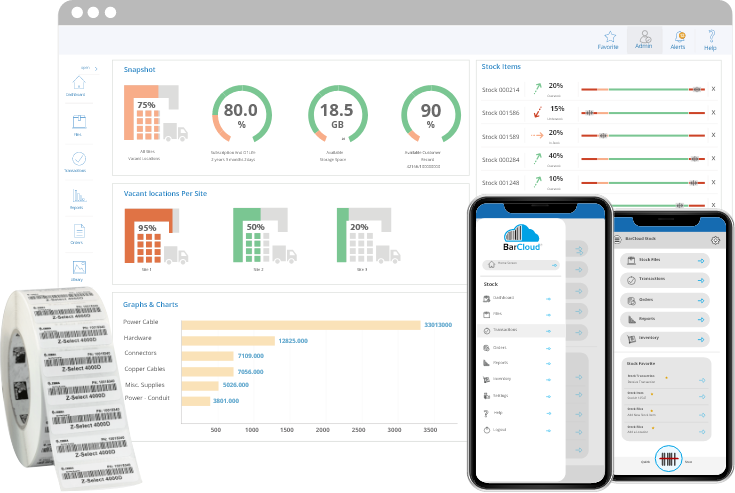
After adopting BarCloud, Serenity House transitioned from spreadsheets to a structured barcode-based system that could be managed both on-premise and on the go. The implementation began with two administrators configuring categories for each location and department, followed by the addition of five users who received personalized training from the BarCloud support team.
The new setup enabled real-time updates, photo documentation for visual verification, and automated alerts for expiring items — all without compromising the organization’s need for local data control. Since launch, Serenity House has significantly reduced waste, improved accountability across locations, and gained the insight needed to confidently prepare for their upcoming nonprofit grocery initiative.

Looking for a Flexible, On-Premise Inventory System for Healthcare?
Explore how our on-premise solution empowers healthcare teams with real-time visibility and reliable tracking.
Contact us to schedule a demo today at barcloud.com
Read More Case Studies

CASE STUDY
Wintergreen Fire & Rescue – Case Study
Wintergreen Rescue & Fire comprises the Wintergreen Fire Department and Rescue Squad, both nonprofit organizations providing fire suppression and emergency medical services...
View Case Study
CASE STUDY
DFS Fire Systems – Case Study
DFS Fire Systems specializes in servicing and installing life safety systems. As part of their operations, they required a robust inventory management system to track and account...
View Case Study
CASE STUDY
Arlington County Fire Dept – Case Study
The Arlington County Fire Department (ACFD), specifically its Logistics Branch, is responsible for inventory management and asset tracking across 10 fire stations, as well as fire training...
View Case Study